
This is a biography I wrote of Srila Bhaktivinoda Thakura...a great Gaudiya Vaisnava devotee of Lord Sri Caitanya Mahaprabhu.
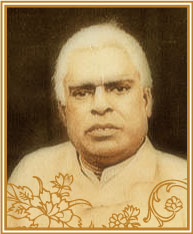
Srila Bhaktivinoda Thakura: An Astonishing Personality
Srila Bhaktivinoda Thakura (1838 – 1914) laid the foundation for the spreading of the teachings of Lord Caitanya and the chanting of the Hare Krsna mantra all over the world. This paper presents an account of his life showing the immense influence he had over the revival of Gaudiya Vaisnavism in India and its future growth worldwide. Bhaktivinoda Thakura almost singlehandedly revived the pure teachings of Lord Caitanya, and without him there almost certainly would be no chanting of the Hare Krishna mantra, and Gaudiya Vaisnavism, in the western world. Gaudiya refers to Gauda or Bengal, where Lord Caitanya began His sankirtan (congregational chanting) movement, and Vaisnava means a devotee of Lord Vishnu or Krishna. Lord Caitanya is an incarnation of Lord Krishna in the mood of a devotee who appeared in this world at Navadvipa in Bengal, India in 1486. Lord Caitanya inaugurated the chanting of the Hare Krishna mantra as the method for God realization in this age of Kali, the age of quarrel, chaos, and confusion, and preached Vaisnavism, love for God, throughout many parts of India.
Srila Bhaktivinoda Thakura was given the name Kedaranatha at birth, which is a name of Lord Siva. He was born on September 2, 1838 in Brinagar, West Bengal to a very wealthy and illustrious family. At the age of 11, his father died. As Bhaktivinoda recalled in his autobiography “Even while my father was living I began to become a little thoughtful, “What is this world? Who are we?”’ (qtd. In Rupavilasa Dasa, 45). These questions continued and became even more of a focus in his life after his father’s death. Eventually these questions were answered as his search continued, culminating in his becoming a great spiritual teacher.
While growing up and going to school, Kedaranatha became a brilliant philosopher and debater. He started writing at the age of 12, and in the year 1856 at age 18 he started attending the University of Calcutta. He wrote two volumes of a planned 12 volume epic poem, which received acclaim and attention from many people, including the Principal. He became expert at public speaking during his time in college and became very learned concerning God, religion, Sanskrit, and western philosophy. He stated in his autobiography how much he liked reading about Jesus Christ, and became very well versed in the Bible, the Koran, and the teachings of Buddha. Thus he was remarkably informed in all aspects of philosophy. He engaged in many discussions about philosophical ideas and books with his fellow students and teachers, and in a discussion with a fellow student he first learned about Lord Caitanya.
Kedaranatha learned that Lord Caitanya’s teachings were contained in numerous works by His followers, including an extensive biography by Srila Krsnadas Kaviraj Gosvami called the Sri Caitnaya-caritamrta. Kedaranatha tried to find these books, but at that time there were virtually no Gaudiya Vaisnava books in print, and those that were available were of poor quality with bad translations. During this period in Indian history the teachings of the Vaisnavas, and the Vedic scriptures and their corollaries, such as the Srimad-Bhagavatam, Bhagavad-gita, and the Mahabharata, were becoming less and less prominent. This was due to the influence of the British East India Company and the mindset of many of the British who believed that Western culture and civilization was higher or more advanced than Indian culture and civilization. They wrote off and belittled the Vedic Scriptures as nothing more than myths. This terrible predicament was later fixed by Kedaranatha’s efforts.
After Kedaranatha completed his education he worked in different teaching positions and was subsequently employed as a clerk in the Judges Court. In 1865, at age 27, he was offered the job of Special Deputy Registrar of Assurances, with powers of a Deputy Magistrate and Deputy Collector for the government. In 1868 he became the Deputy Magistrate of Dinajpur. While there, he wrote, “I had a desire to know what the genuine Vaisnava dharma [duty] was. I wrote to our agent Pratap Chandra Ray, and he sent a published translation of Srimad-Bhagavatam and Sir Caitnaya-caritamrta.” (qtd. in Rupavilasa Dasa, 82) From this day onwards, he made it a point to speak with the Vaisnavas around him, and from this he developed understanding of the Vaisnava religion. Day and night he would read about Krishna and Lord Caitanya, and chant Their holy names.
In 1870, Kedaranatha moved with his family, including his mother, wife, and their 4 children at the time, to Puri as Deputy Magistrate. His duties included supervision of the affairs of the Jaganatha temple. There, he made great advancement in his studies of the Gaudiya Vaisnava texts. He studied the 12 cantos of the Srimad Bhagavatam and learned to write in Sanskrit. He wrote in his autobiography that he made much advancement in his devotional service to God during his time there. “Any idea I might have had that worldly progress produces anything of lasting value was gone forever.” (qtd. in Rupavilasa Dasa, 129). He would go almost every evening to chant the names of Krishna at the temple with all the other devotees.
In 1874 Kedaranatha returned to Bengal, and for the next 4 years he moved around frequently, until getting posted in Naral, which is east of Calcutta. He remained there for 3 years, and this is where he published two of his major works. Firstly, the Krsna-samhita, which was published in 1879, is a historical and philosophical essay about Krishna that was very well received, even by European scholars such as Dr. Reinhold Rost, a famous linguist and scholar of his day. The following year, 1880, he published a small book of songs called Kalyana-kalpataru, which is translated as “The Desire Tree of Auspiciousness”, which was also very well regarded.
Before leaving Naral in 1881, Kedaranatha started his Vaisnava journal Sajjana-tosani. This “included reviews of Vaisnava publications, topical announcements and serialized publications of Kedar’s writings.” (Shukavak N. Dasa, 96). After leaving Naral, he found a permanent house in Calcutta, for Kedaranatha now had 10 children and needed to establish a stable place of residence. While his wife and most of his children stayed in Calcutta, he got transferred to Barasat, which is near Calcutta, and then Serampore in 1884. In 1885 he returned to his home in Calcutta and established the Caitanya Press, where he published his own works as well as others. He was then able to have his Vaisnava journal published on a regular basis.
In 1886, Kedaranatha published an abundance of literature. After receiving a copy of the commentary on the Bhagavad-Gita by a great Gaudiya Vaisnava Acharya (spiritual master), Srila Visvanatha Cakravarti Thakura, he took up the task of publishing a good version of the Bhagavad-Gita, including the commentary of Visvanatha. This same year he published many other books, notably Sri Caitanya-siksamrta, a philosophical novel Prema-pradipa, prose (Dsopanisad-curnika), and many other books.
In 1887 Kedaranatha traveled around Bengal looking for the Caitanyopanisad, part of the original Vedas, which described Lord Caitanya. After extensive searching he finally found it, and, after hearing of his discovery, the rest of the Gaudiya Vaisnava community asked him to publish a Sanskrit commentary on it. This was published as the Sri Caitanya-caratnamrta. It was during this time in Kedaranatha’s life that he was awarded the title Bhaktivinoda by a group of Vaisnava scholars that he referred to as “the masters” (qtd. in Rupavilasa Dasa, 159). Bhaktivinoda means “the pleasure of devotional service” which suited him very much. Thakura is a title of respect for a man from a high ranking family or a landowner and also means lord or master. From then on he was known in the Gaudiya Vaisnava community as Bhaktivinoda Thakura.
In 1888 Bhaktivinoda started to search for the birthplace of Lord Caitanya, which had been lost for many generations due to the shifting of the Ganges River. He traveled by train to the city of Navadvipa every Saturday to look for it, and after extensive ground searches, research of old scriptures, and discussions with elderly residents in the area, he indeed found the very spot. This was a colossal event in Gaudiya Vaisnava history as it allowed for the creation of a bona fide place of pilgrimage for the followers of Lord Caitanya and helped to establish His authenticity to the doubting public.
After this, Bhaktivinoda continued preaching, writing and publishing many philosophical works, and continued his livelihood of being an important judge/magistrate. In these duties he was highly valued by the British Raj. In 1891 he requested a two-year furlough so that he could focus full time on preaching. During this time, in 1893, he published several important works: Jaiva-dharma, a Vaisnava philosophical novel which is seen as the ultimate exposition of Gaudiya Vaisnava siddhanta (perfect truth); and Saranagati, Gitavali, and Gita-mala, 3 small songbooks that beautifully expressed in simple Bengali language the philosophy of Lord Caitanya.
After Bhaktivinoda returned to his government position in 1894, he longingly thought of retirement, as he felt that his work in the government was simply an encumbrance to the greater need of preaching. That year, at the age of 56, Bhaktivinoda retired and took his pension, now able to engage himself fully in preaching, chanting, and writing.
The year 1896 proved to be a significant one, for his preaching reached the western world! His book Sri Gauranga-lila-smarana-mangala-stotram (Lord Caitanya, His Life and Precepts), a book that had 104 Sanskrit verses and a simplified description of the teachings of Lord Caitanya in English, was sent to many different universities and intellectuals all over the world. Prior to this, people of the west were unaware of such literature, as they were unable to read Sanskrit. The publication of this book and the subsequent reaction by the readers was the beginning of the spread to the western world of Lord Caitanya’s movement. 1896, coincidentally, was the same year that Srila A.C. Bhaktivedanta Swami, an illustrious devotee of Lord Caitanya, was born. Bhaktivinoda Thakura had predicted the appearance of someone who would soon appear to spread the teachings of Lord Caitanya worldwide. Srila A.C. Bhaktivedanta Swami continued the work of Bhaktivinoda and wrote and translated numerous books into English, including the Bhagavad-Gita, the Srimad-Bhagavatam, and the Sri Caitanya-caritamrta, and, beginning in 1965, spread the teachings of Lord Caitanya all over the world. He is the founder of ISKCON.
Bhaktivinoda spent the next four years traveling the country doing his preaching work, publishing many books, and visiting the holy places. He returned to Puri in 1900, which was the site of the final pastimes of Lord Caitanya. Living there was his son, the great Gaudiya Vaisnava Srila Bhaktisiddhanta Sarasvati Thakura, who would eventually become the Guru or spiritual master of Srila A.C. Bhaktivedanta Swami.
That year, 1900, Bhaktivinoda published another important work, the Sri Harinama-cintamini, translated as “The Wish-fulfilling Gem of the Holy Name”. This book presented the teachings of Srila Haridas Thakura, who was a great devotee of God and a follower of Lord Caitanya. The book was presented in the form of a discussion between Lord Caitanya and Haridas Thakura. Over the next 7 years Bhaktivinoda continued to publish many more books, concluding with his last known work in 1907.
Bhaktivinoda became determined to give up his life as a householder and take on the renounced order of life. In the Vedic tradition, there are 4 stages, or asramas, of life: bramacarya (student life), grhastha (householder), vanapratha (retired) and sannyasa (the renounced order). The vast majority of his life, Bhaktivinoda was a householder, living with his wife, Srimati Bhagavati devi, with whom he had 13 children (plus 1 by his first wife who died very young). By the year 1908, Bhaktivinoda was 70 years old and wanted to live out the remainder of his life solely focused on chanting and God, with no outside distractions, such as family. He became initiated into the renounced order as a babaji by Srila Gaura Kisora dasa Babaji Maharaja, who is also the Guru of Bhaktivinoda’s son, the previously mentioned Srila Bhaktisiddhanta Saraswati. After taking this initiation, he persisted in his writing and chanting. In 1910, he shut himself up in his home in Calcutta, Bhakti Bhavan, so that he could one pointedly focus on the Lord without interruptions. On June 23, 1914, Srila Bhaktivinoda Thakura left this world.
It was the wish of Bhaktivinoda Thakura to spread his wealth of knowledge about Lord Caitanya to the western world. In his Vaisnava journal, the Sajjana-tosani, he wrote,
“Sriman Mahaprabhu [Lord Caitanya] did not descend with his Associates to deliver a certain number of human beings in the land of India, but rather His purpose was to deliver and uplift all living beings in all countries of the world.” (qtd. in Rupavilasa Dasa, 250)
He did not feel that Lord Caitanya’s teachings were meant to be for only a few people in India; he felt everyone should know of them!
Prior to the appearance of Bhaktivinoda Thakura, the philosophy of Lord Caitanya had become warped and perverted by people with little understanding of his teachings, so for practical purposes the teachings of Lord Caitanya had been lost. Bhaktivinoda Thakura restarted and reestablished Lord Caitanya’s movement, rediscovering the lost teachings and republishing them with the proper translations and commentaries. He wrote nearly 100 books in his lifetime, even while for a good part of his life he was working as a judge/magistrate and fulfilling the responsibilities of his family life. It is simply amazing that he was able to accomplish all that he did, with so many responsibilities, and was able to execute all his duties so well. A friend of his said this in a biography entitled A Glimpse into the Life of Thakur Bhaktivinode:
“Even under pressure of official work as a magistrate in charge of heavy subdivision, he could find time for devotional contemplation and work…Service of God is the only thing that he longed for and service under Government, however honorable, was to him a clog.” (qtd. in Rupavilasa Dasa, 239)
While he carried out his duties as a government worker with great care and deliberation, he felt that his preaching work was much more important.
Without Srila Bhaktivinoda Thakur, we would not have had Srila Bhaktisiddhanta Sarasvati Thakura, his son, who then would not have instructed his disciple Srila A.C. Bhaktivedanta Swami Prabhupada to go to the west, and who then achieved spectacular success in spreading the teachings of Lord Caitanya. These two astonishing personalities thereby fulfilled the desires of Srila Bhaktivinoda Thakura by spreading the teachings of Lord Caitanya all around the world.
Bibliography
Dasa, Rupavilasa. The Seventh Goswami. Manning, SC: New Jairpur Press, 1989.
Print.
Print.
Dasa, Shukavak N. Hindu Encounter With Modernity. Sanskrit Religions Institute, 1999. Print.
Srila Bhakti Ballabh Tirth Maharaj. Sri Chaitanya: His Life & Associates. Mandala Publishing, 2001. Print.
Copyright Manjari Fergusson

No comments:
Post a Comment